

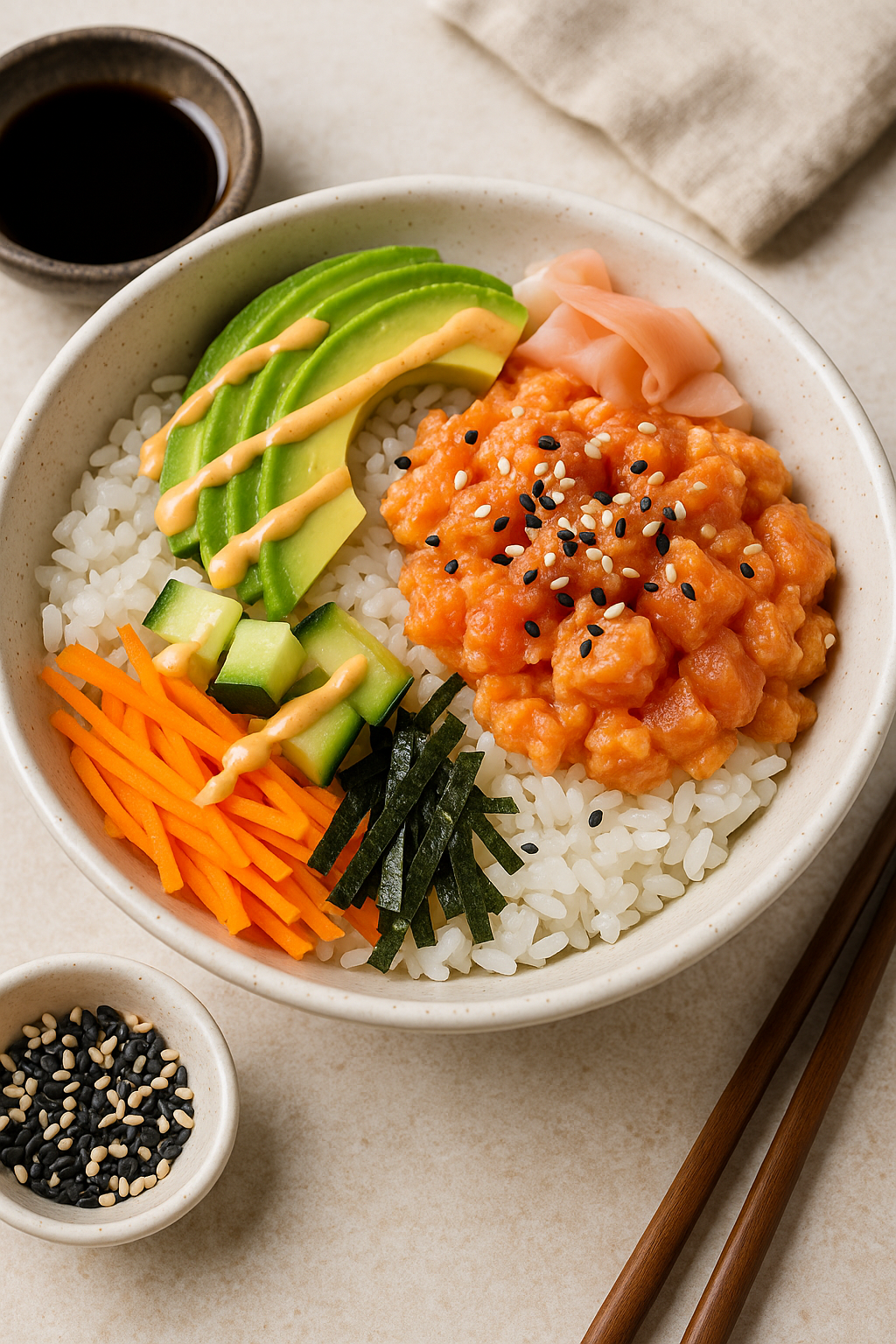

I love sushi but I’m terrible at rolling it. Tried it a few times, ended up with rice everywhere and a nori sheet that looked like it went through a shredder. Sushi bowls solved that problem entirely. All the flavors of a spicy tuna roll, zero rolling required. Everything just goes in a bowl, arranged however you want, and it looks great every time.
These bowls are fast, fresh, and satisfying in a way that’s hard to describe if you haven’t made them. There’s something about the combination of warm seasoned rice, cool spicy tuna, creamy avocado, and crunchy cucumber that just works on every level. It’s light but filling, simple but impressive, and takes about 15 minutes start to finish if your rice is already cooked.
I started making these after years of spending twenty-five dollars on sushi takeout and thinking, “I could probably do this at home.” Turns out I was right, at least for the bowl version. Rolling maki is still beyond my skillset. But deconstructing it into a bowl? That I can handle.

Spicy Tuna Sushi Bowls
Ingredients
- 12 oz sushi-grade ahi tuna diced into small cubes
- 2 cups cooked sushi rice seasoned with rice vinegar and a pinch of sugar
- 1 avocado sliced
- 1 cucumber sliced thin
- shelled edamame
- 2 tbsp soy sauce
- 1 tbsp sriracha
- 1 tbsp mayo
- 1 tsp sesame oil
- sesame seeds and scallions for topping
- nori strips optional
Instructions
- Mix soy sauce, sriracha, mayo, and sesame oil to make the spicy tuna sauce.
- Gently toss the diced tuna in the sauce.
- Divide sushi rice between bowls. Arrange spicy tuna, avocado, cucumber, and edamame on top.
- Sprinkle with sesame seeds, scallions, and nori strips. Eat immediately.
Notes
Nutrition
Ingredients
12 oz sushi-grade ahi tuna, diced into small cubes (about ½ inch). Make sure it’s labeled sushi-grade or sashimi-grade. This is raw fish, so quality matters. More on that below.
2 cups cooked sushi rice. Use short-grain Japanese rice if you can find it. It has the right stickiness and texture. Season it while it’s still warm with about 2 tablespoons of rice vinegar, 1 teaspoon of sugar, and a pinch of salt. Stir gently and fan the rice as you fold in the seasoning. This cools it down and gives it that slightly glossy, sticky texture you get at sushi restaurants.
1 ripe avocado, sliced. 1 cucumber, sliced into thin half-moons or matchsticks. A handful of shelled edamame (you can buy these frozen and thaw them under running water). Sesame seeds and sliced scallions for topping. Nori strips or crumbled nori for garnish (optional but adds an authentic touch).
For the spicy tuna sauce: 2 tablespoons soy sauce, 1 tablespoon sriracha, 1 tablespoon mayo (Japanese Kewpie mayo is the best option here because it’s richer and slightly tangier, but regular mayo works), and 1 teaspoon toasted sesame oil. This ratio is a starting point. If you like more heat, add more sriracha. If you want it creamier, add more mayo. Adjust to your taste.
Assembly
Make the spicy tuna sauce by whisking the soy sauce, sriracha, mayo, and sesame oil together in a small bowl until smooth. Gently fold the diced tuna into the sauce. You don’t want to mash or crush the fish, just coat every piece. Set it aside while you prep everything else.
Divide the seasoned sushi rice between two bowls. Arrange the spicy tuna on one side of the rice. Add the sliced avocado, cucumber, and edamame in sections around the bowl. You’re going for that arranged, Instagram-worthy look where each ingredient has its own section. Or just dump it all on top. It tastes the same either way.
Sprinkle with sesame seeds, sliced scallions, and nori strips if you have them. Serve immediately.
On Buying Sushi-Grade Fish
This is the most important part of the recipe. Since the tuna is eaten raw, you need to buy it from a trusted source. Look for tuna labeled “sushi-grade” or “sashimi-grade” at your grocery store’s fish counter or at a reputable fishmonger. The label means the fish has been flash-frozen at extremely low temperatures to kill parasites, making it safe to eat raw.
Good sushi-grade ahi tuna should be deep red in color with a clean, fresh appearance. It should smell like the ocean, not “fishy.” If it smells off, looks brown or dull, or has a slimy texture, don’t buy it. Better to scrap the sushi bowl plan than to risk eating questionable raw fish.
If you absolutely cannot find sushi-grade tuna, there are alternatives. Sushi-grade salmon works as a swap. Or you can use cooked shrimp (chilled and chopped) or even well-drained canned albacore tuna for a more budget-friendly version. It won’t be the same experience, but it’s still a solid bowl.
Rice Tips
The rice is half the experience, so it’s worth getting right. Use short-grain Japanese sushi rice (brands like Nishiki or Kokuho Rose are widely available). Rinse the rice in a fine mesh strainer under cold water until the water runs mostly clear, usually 4 to 5 rinses. This removes excess starch and prevents gummy rice.
Cook according to package directions or in a rice cooker. Season the rice while it’s still hot. The warmth helps the vinegar and sugar absorb into the grains. Use about 2 tablespoons of rice vinegar, 1 teaspoon of sugar, and a pinch of salt per 2 cups of cooked rice. Fold gently with a rice paddle or spatula (don’t stir or mash) and fan the rice as you fold to cool it down. You’ll notice the rice starts to look slightly glossy and feel a little sticky to the touch. That’s perfect.
Don’t refrigerate the rice before using it. Sushi rice should be served at room temperature. Cold rice hardens and loses its texture.
More Topping Ideas
Mango: Diced ripe mango adds a sweet, tropical element that pairs surprisingly well with the spicy tuna.
Pickled ginger: The kind that comes with sushi takeout. It cleanses your palate between bites and adds a bright, tangy pop.
Crispy onions or tempura flakes: Adds crunch. You can find tempura flakes (called tenkasu) at Asian grocery stores, or just crush up some tempura chips.
Spicy mayo drizzle: Mix extra sriracha and mayo and drizzle it over the whole bowl for added creaminess and heat.
Ponzu sauce: A citrusy soy sauce that works as an alternative to regular soy sauce if you want a brighter flavor profile.
Why This Isn’t a Make-Ahead Recipe
I want to be upfront about this: sushi bowls don’t store well. The tuna is best eaten immediately after being sauced. The avocado browns within an hour. The rice dries out in the fridge. This is a make-it-and-eat-it-now kind of meal. If you want to meal prep, you can season the rice and prep the vegetables ahead of time, but don’t sauce the tuna or slice the avocado until you’re ready to eat.
Frequently Asked Questions
Can I use frozen tuna? If it was frozen specifically for sushi (labeled sushi-grade), yes. Thaw it overnight in the fridge, pat it dry, and dice it. Don’t use regular frozen tuna steaks from the seafood section unless they’re specifically labeled for raw consumption.
What’s the difference between a poke bowl and a sushi bowl? Poke bowls originated in Hawaii and traditionally use larger chunks of fish marinated in a soy-based sauce. Sushi bowls are more of a deconstructed sushi roll concept. In practice, the lines are blurred and both terms are used pretty interchangeably these days.
Can kids eat this? If you’re comfortable with them eating sushi-grade raw fish, yes. For younger kids, you can substitute cooked shrimp or crab stick (surimi) instead of raw tuna and skip the sriracha in the sauce.


