

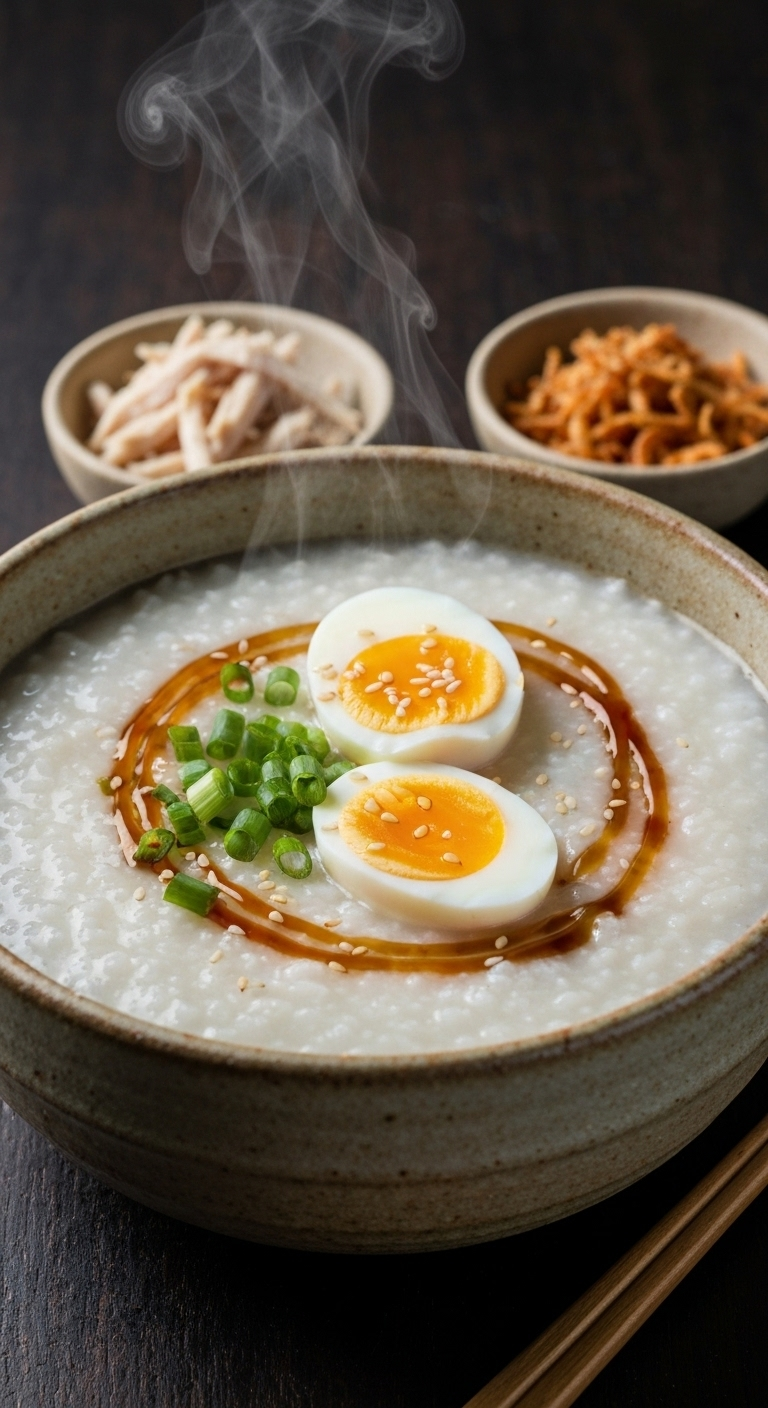

I’ll be honest, I didn’t grow up eating congee. It wasn’t until a particularly brutal Iowa winter morning, when I had leftover rice and zero motivation to do anything complicated, that I gave it a shot. I simmered some rice in chicken broth with ginger and garlic, cracked an egg on top, and sat down to one of the most comforting breakfasts I’d ever had.
Now it’s become something I crave. Not just when it’s cold (though it’s perfect for that) but anytime I want something warm and simple that still feels nourishing. The kids ask for it when they’re not feeling well, my wife requests it on lazy Sunday mornings, and I make it for myself on those days when I just need something gentle to start the day.
If you’ve never made congee before, here’s the short version: it’s rice porridge. You cook rice in way more liquid than usual until it breaks down into something silky and creamy. It sounds basic, and it is. That’s the beauty of it. It’s been a staple across Asia for centuries, from China to Thailand to the Philippines, and every culture puts their own spin on it. My version leans on ginger, garlic, soy sauce, and a good chicken broth as the foundation.

Savory Congee with Egg
Ingredients
Congee
- 1 cup jasmine rice uncooked, or 3 cups leftover cooked rice
- 8 cups chicken broth homemade is ideal
- 2 garlic cloves smashed
- 1 inch fresh ginger sliced into coins
- 1 tbsp soy sauce
- 1 tsp sesame oil
- salt and white pepper to taste
Toppings
- soft-boiled or jammy eggs
- sliced scallions
- chili crisp or sriracha
- toasted sesame seeds
- sesame oil for drizzling
Instructions
- Rinse the rice until the water runs mostly clear. Skip this if using leftover rice.
- Combine rice, broth, garlic, ginger, and soy sauce in a large pot. Bring to a boil, then reduce heat to low and simmer, stirring occasionally.
- For uncooked rice, simmer 60 to 75 minutes. For leftover rice, simmer 25 to 30 minutes. The rice should fully break down into a creamy texture.
- Remove the ginger and garlic pieces. Stir in sesame oil, then season with salt and white pepper to taste.
- Ladle into bowls and top with soft-boiled eggs, scallions, chili crisp, sesame seeds, and an extra drizzle of sesame oil.
Notes
Nutrition
The recipe card above has everything you need, but here’s a little more detail on each step and some things I’ve picked up from making this dozens of times.
The Ingredients
For the congee:
You’ll need 1 cup of jasmine rice (uncooked) or about 3 cups of leftover cooked rice. Jasmine rice is my go-to because it has a naturally floral aroma and breaks down into a softer, smoother porridge than long-grain or basmati. You’ll also need 8 cups of chicken broth. Homemade is ideal if you have it because the gelatin in homemade stock gives the congee extra body, but store-bought works just fine. Go with a low-sodium version so you can control the salt yourself.
For aromatics, grab 2 garlic cloves and smash them with the flat side of your knife. You want them crushed, not minced, because you’ll fish them out later. Same goes for a 1-inch piece of fresh ginger sliced into coins. Round it out with 1 tablespoon of soy sauce, 1 teaspoon of sesame oil, and salt and white pepper to taste. White pepper is traditional and gives a warmer, more subtle heat than black pepper, but either works.
For topping:
This is where congee really becomes your own. I like soft-boiled or jammy eggs (6 to 7 minutes in boiling water, then straight into an ice bath). Sliced scallions add color and a mild onion bite. Chili crisp or sriracha brings heat. Toasted sesame seeds give crunch. And a final drizzle of sesame oil ties everything together. Other great options include shredded nori, crispy fried garlic, a few drops of fish sauce, or even a spoonful of kimchi.
How to Make It
If using uncooked rice, rinse it under cold water until the water runs mostly clear. This removes excess surface starch that can make the porridge gummy instead of silky. If you’re using leftover rice, skip this step entirely.
Toss the rice into a large heavy-bottomed pot with the broth, garlic, ginger, and soy sauce. Bring everything to a boil over medium-high heat, then immediately drop the heat to low. You want a gentle simmer, not a rolling boil. A hard boil evaporates the liquid too fast and can cause the rice to stick and scorch on the bottom.
Stir it every 10 minutes or so to keep things from sticking. If you’re starting with uncooked rice, you’re looking at about 60 to 75 minutes. Leftover rice cuts that down to around 25 to 30. Either way, you want the rice to fully break down until the whole pot looks creamy and slightly thick. It should coat a spoon but still pour easily. If it gets too thick at any point, just add a splash of broth or hot water.
Once it’s there, fish out the ginger coins and garlic cloves. Stir in the sesame oil, taste it, and adjust the salt. Ladle into bowls and go to town with toppings.
A Few Things I’ve Learned
The biggest mistake is rushing it. Congee wants low heat and patience. If you crank the flame, the broth evaporates too fast and you end up with something gummy instead of silky. The starch in the rice needs time to release slowly and thicken the broth naturally. Think of it like a risotto mentality: gentle heat, occasional stirring, no shortcuts.
Don’t skip the broth. I made it with water once when I was out of broth and it was fine, but “fine” isn’t what we’re going for. Broth gives it that savory backbone that makes the whole thing sing. If you only have water, compensate by doubling the ginger and garlic, adding a splash of fish sauce, and maybe a tablespoon of miso paste at the end.
Another tip: if you want an even silkier texture, try freezing the rice overnight before cooking. The ice crystals break down the grain structure so it disintegrates faster in the pot. It’s not required, but it’s a nice trick if you’re planning ahead.
Ways to Change It Up
Heartier bowl: Add shredded chicken (rotisserie works great) or sautéed mushrooms. Both give it substance without competing with the creamy base. I especially like a mix of shiitake and cremini mushrooms sliced thin and cooked with a little soy sauce.
Extra umami: Stir a spoonful of miso paste in at the end, right before serving. It deepens the flavor without making it taste like miso soup. White miso is milder, red miso is more intense. Either works.
Crispy topping: Fried shallots on top. Trust me on this one. The crunch against the silky porridge is everything. You can buy them pre-made at most Asian grocery stores, or slice shallots thin and fry them in oil until golden.
Vegetarian version: Swap the chicken broth for vegetable broth and top with tofu (firm tofu, cubed and pan-fried until crispy on the outside). Add extra ginger to compensate for the lighter broth flavor.
Spicy version: Stir in chili crisp, sriracha, or a dash of white pepper before serving. Lao Gan Ma brand chili crisp is my favorite for congee because it has crunchy bits that add texture along with the heat.
Breakfast for dinner: Top with a fried egg instead of soft-boiled, some crispy bacon crumbled on top, and a handful of scallions. It crosses into breakfast-for-dinner territory and my kids love it.
Storage and Reheating
Congee keeps well in the fridge for 3 to 4 days in an airtight container. It’ll thicken up considerably as it sits because the rice continues to absorb liquid even after it cools. When you reheat it, add a splash of broth or water and stir until it loosens back up. It reheats beautifully on the stove over medium-low heat or in the microwave in 2-minute intervals, stirring between each one.
I usually make a big batch on Sunday and eat it through the week. It’s one of those rare recipes that reheats almost as well as it tastes fresh, which makes it ideal for meal prep.
You can also freeze congee for up to 2 months. Portion it into individual containers, leaving a little room at the top since it expands. Thaw overnight in the fridge and reheat with extra liquid.
Frequently Asked Questions
Can I use brown rice? You can, but it takes significantly longer to break down (90+ minutes) and won’t get quite as silky. Short-grain white rice or jasmine rice gives the best results.
Is congee the same as jook? Essentially yes. Jook is the Cantonese word for congee. Different regions have different names and slightly different styles, but the concept is the same: rice cooked in lots of liquid until it becomes porridge.
Can I make this in a slow cooker or Instant Pot? Absolutely. For a slow cooker, combine everything and cook on low for 6 to 8 hours. For an Instant Pot, use the porridge setting (about 20 minutes at pressure with a natural release). Both methods work well.


