

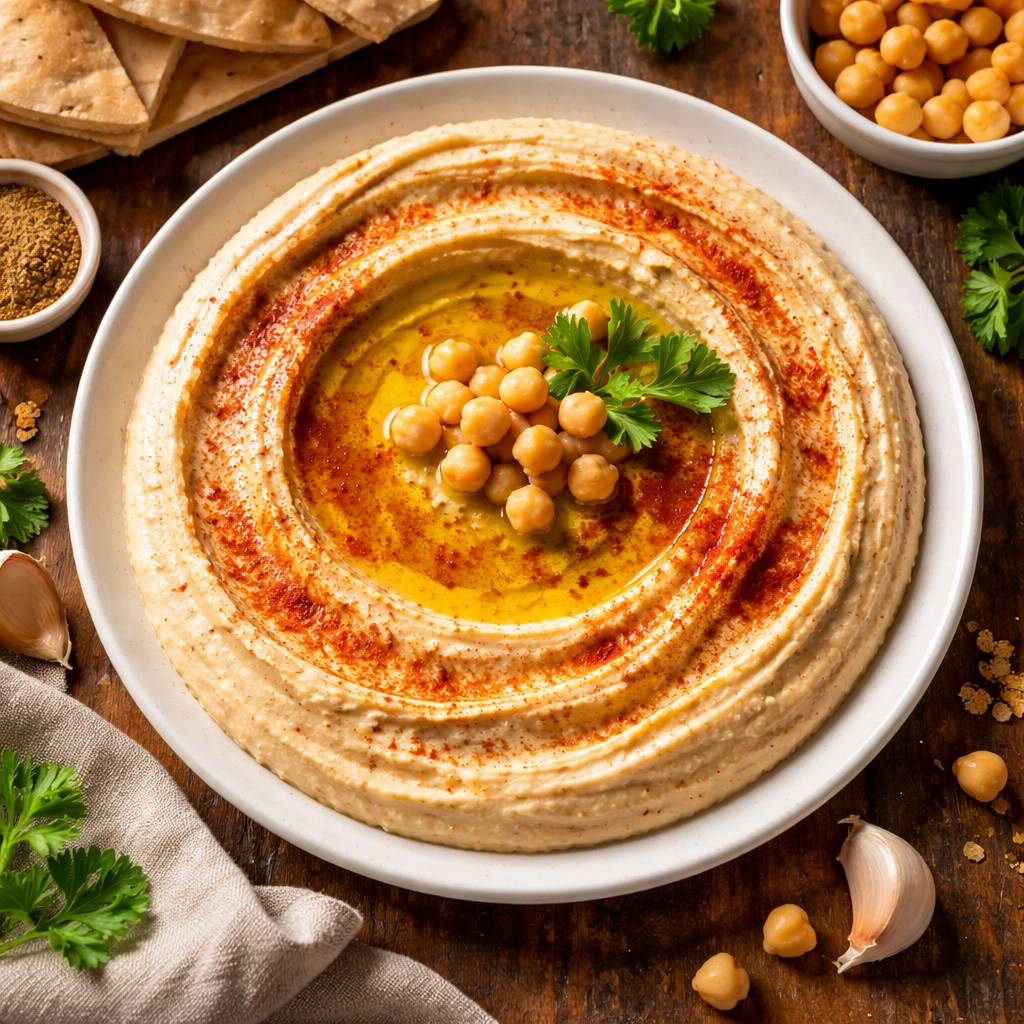
My introduction to hummus was not a good one. I was probably twelve, and someone brought a store-bought container of it to a family gathering with a bag of pita chips. I tried it, decided it tasted like paste, and didn’t think about it again for years. Then in my mid-twenties I was at a Middle Eastern restaurant with some friends and ordered the hummus because someone else at the table insisted and I was out of better ideas. What came out was something else entirely — silky and rich, with a little pool of olive oil in the middle, a sprinkle of paprika, and a flavor that was tangy and nutty and genuinely good. I ate most of it before the main course arrived.
The difference, I learned later, was tahini and technique. Good hummus has a lot of tahini — more than you’d expect — and the chickpeas get processed long enough to become genuinely smooth rather than just mashed. That grainy, heavy texture from the store is what happens when you cut corners on both. Making it at home doesn’t take long, but it does take a few extra minutes of blending that most commercial producers skip.
I’ve been making this version for a few years now. My kids eat it on everything — pita bread, carrots, pretzels, plain crackers, occasionally just off a spoon — and it’s become one of those fridge staples that I make a batch of every week or so without thinking about it.

Homemade Hummus
Ingredients
- 15 oz can chickpeas, drained (reserve liquid)
- 1/3 cup tahini well stirred
- 3 tbsp fresh lemon juice about 1 large lemon
- 1 clove garlic
- 1/2 tsp kosher salt plus more to taste
- 1/4 tsp ground cumin
- 2-3 tbsp ice water
- 2 tbsp olive oil for serving
- smoked paprika, for serving optional
Instructions
- Add tahini and lemon juice to a food processor. Process for 1 minute, scrape down the sides, and process for another 30 seconds. This lightens the tahini and creates a creamier base.
- Add garlic, salt, and cumin. Process for 30 seconds until combined.
- Add drained chickpeas and process for 1 full minute.
- With the processor running, drizzle in ice water one tablespoon at a time until the hummus is smooth and creamy. 2 tablespoons is usually enough.
- Taste and adjust salt and lemon. Transfer to a bowl, create a shallow well with the back of a spoon, drizzle with olive oil, and dust with smoked paprika if desired.
Notes
Nutrition
Ingredients
You’ll need one 15-ounce can of chickpeas (drained, liquid reserved), a third of a cup of tahini, 3 tablespoons of fresh lemon juice, 1 clove of garlic, half a teaspoon of kosher salt, a quarter teaspoon of cumin, 2 to 3 tablespoons of ice water, and 2 tablespoons of olive oil for serving. Optional toppings: smoked paprika, a drizzle of olive oil, and a few whole chickpeas.
How to Make It
Add the tahini and lemon juice to a food processor and process for about a minute. This step sounds unnecessary but it matters — whipping the tahini with lemon juice before anything else lightens it and creates a creamier base. Scrape down the sides and process for another 30 seconds.
Add the garlic, salt, and cumin. Process until the garlic is fully incorporated, about 30 seconds. Add the drained chickpeas and process for a full minute. The mixture will look thick and a little rough at this point. With the processor running, drizzle in the ice water one tablespoon at a time until the hummus is as smooth and creamy as you want it. Two tablespoons usually gets me where I want to be; a third makes it a little lighter and airier.
Taste it. Adjust the salt, lemon, or cumin. Transfer to a bowl or plate, use the back of a spoon to make a shallow well in the center, drizzle in the olive oil, and add whatever toppings you like. Serve immediately or refrigerate until you need it.
Tips
The single biggest upgrade you can make is to peel the chickpeas. I know that sounds tedious, and it is a little, but it takes about five minutes and the result is noticeably smoother. After draining the chickpeas, rub them between your hands or between two kitchen towels — the skins slip right off. You don’t have to get every single one; getting most of them is enough.
Ice water is not a gimmick. Cold water keeps the hummus from heating up in the food processor (friction warms things) and helps emulsify the tahini. Room temperature water works, but ice water gives you a silkier result.
Tahini quality varies a lot. A good tahini should smell nutty, not bitter, and should be pourable. Brands like Soom or Whole Foods 365 are reliable. If your tahini smells rancid or is clumped at the bottom of the jar, that’s going to come through in the final product.
Variations
Roasted garlic instead of raw makes the hummus mellower and sweeter. Slice the top off a head of garlic, drizzle with olive oil, wrap in foil, and roast at 400 degrees for 40 minutes. Squeeze out a few cloves and use them in place of the raw garlic. Completely different flavor, both are good.
Roasted red pepper hummus is worth trying if you want something a little different. Add one jarred roasted red pepper (drained) with the chickpeas and blend everything together. The color comes out a warm orange-pink and the flavor is sweeter with a subtle smokiness.
For a spicier version, add half a teaspoon of harissa paste or a pinch of cayenne. Harissa in particular plays well with the lemon and tahini — it adds heat and a little floral quality that elevates the whole thing.
Storage and Make-Ahead
Hummus keeps in the fridge for up to a week in an airtight container. It thickens as it sits, so if it seems dense when you pull it out, stir in a teaspoon of water or olive oil to loosen it back up. The flavor actually gets a little better after a day in the fridge once everything has had time to settle together.
You can freeze hummus if you need to, though the texture softens slightly after thawing. Freeze in small portions in zip bags or containers, thaw overnight in the fridge, and stir well before serving. It’s perfectly fine — just not quite the same as fresh.
Frequently Asked Questions
Can I use dried chickpeas instead of canned?
Yes, and many people think it makes better hummus. Soak a cup of dried chickpeas overnight, then simmer them until very tender, about 1 to 2 hours. They should be soft enough to crush easily between your fingers. Use them warm in the food processor — warm chickpeas blend smoother than cold ones. Reserve some of the cooking liquid to use in place of the ice water.
Why does my hummus taste bitter?
Probably the tahini. Bitter tahini is the most common cause of bitter hummus. Try a different brand. It can also be from too much raw garlic — one small clove is usually plenty. If you’re sensitive to garlic, try roasting it first.
How do I get hummus really smooth?
Process it longer than you think you need to, peel the chickpeas, and use ice water. The combination of those three things gets you to a genuinely smooth result. Don’t rush the blending — let the food processor run for a solid two minutes after adding the chickpeas.
What do you serve with hummus?
Warm pita bread is the classic. Cut vegetables like carrots, cucumbers, and bell peppers work great. Pita chips, crackers, or pretzels all do the job. Hummus is also good spread on sandwiches or used as a base for a grain bowl — it doesn’t have to be just a dip.
Is store-bought tahini already stirred?
Usually not. The oil separates and floats to the top over time. Before measuring tahini for this recipe, stir the jar thoroughly until it’s combined. If the separation is severe and it’s been sitting for a while, you may need to stir for a couple of minutes. Storing tahini in the fridge after opening slows the separation.


