

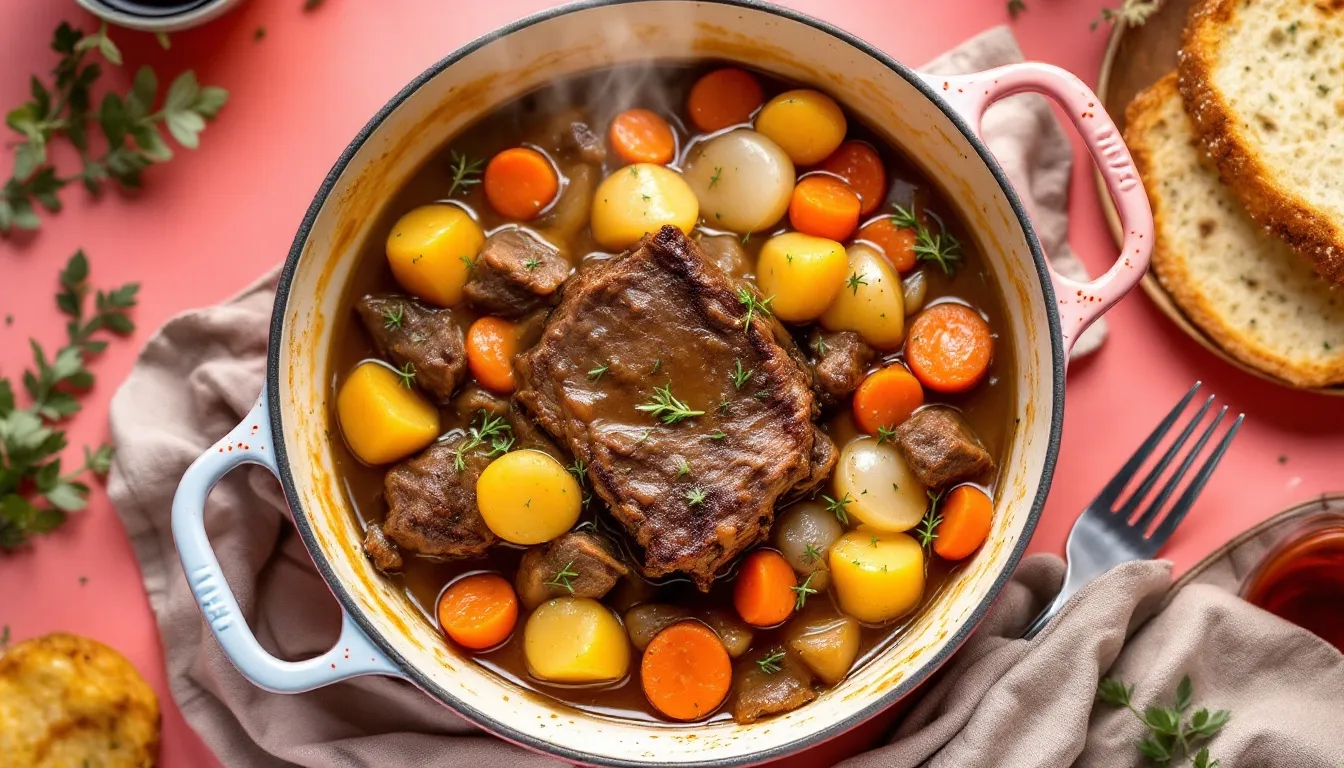

Pot roast is one of those recipes that sounds more intimidating than it actually is. You’re basically putting a big piece of meat in a pot with some vegetables, adding liquid, and letting the oven do the work for a few hours. That’s it. The oven is doing 90% of the job. You’re just setting it up for success.
Growing up, this was our Sunday dinner. The roast would go in around noon, the house would start smelling incredible by 2, and by the time we sat down to eat, the meat was falling apart with a fork. It’s the kind of meal that makes you want to slow down and actually sit at the table. No phones, no distractions, just a plate of tender beef and roasted vegetables and maybe a second helping if you’re lucky enough that there’s extra.
I’ve been making this recipe for years now and I’ve tweaked it plenty of times, but this version is the one I always come back to. It’s not complicated, but every step has a purpose, and when you follow them, the result is something that tastes like it took way more effort than it actually did.

Classic Pot Roast
Ingredients
- 3-4 lb chuck roast
- 1 lb baby potatoes halved
- 4 large carrots cut into chunks
- 1 yellow onion quartered
- 4 garlic cloves smashed
- 2 cups beef broth
- 2 tbsp tomato paste
- 1 tbsp Worcestershire sauce
- 2 sprigs fresh rosemary
- 2 sprigs fresh thyme
- 2 tbsp olive oil
- salt and pepper
Instructions
- Pull the roast out of the fridge 30 minutes before cooking. Pat dry and season generously with salt and pepper. Preheat oven to 325°F.
- Heat olive oil in a Dutch oven over medium-high heat. Sear the roast for 3 to 4 minutes per side until deeply browned. Remove and set aside.
- In the same pot, cook onion and garlic for a couple of minutes. Stir in tomato paste and let it darken slightly. Add broth and Worcestershire sauce, scraping up browned bits.
- Nestle the roast back in. Tuck rosemary and thyme around it, arrange potatoes and carrots around the sides. Cover with a tight-fitting lid.
- Cook in the oven for 3 to 3.5 hours until the meat pulls apart easily with a fork.
Notes
Nutrition
What You Need
A 3 to 4 lb chuck roast is the ideal cut for pot roast. Chuck comes from the shoulder of the cow, which means it’s a working muscle full of connective tissue and collagen. That sounds like a bad thing but it’s actually what makes pot roast work. All that tough tissue breaks down during the long, slow cook and turns into gelatin, which gives the meat and the braising liquid that rich, silky, almost velvety texture. Don’t substitute with a lean cut like round roast or sirloin tip. They’ll dry out.
For vegetables, you’ll need 1 lb baby potatoes halved (Yukon Gold hold up best, they get creamy without falling apart), 4 large carrots cut into 2-inch chunks (not too small or they’ll disintegrate), 1 yellow onion quartered, and 4 cloves of garlic smashed with the flat of your knife.
For the braising liquid and aromatics: 2 cups beef broth, 2 tablespoons tomato paste, 1 tablespoon Worcestershire sauce, 2 sprigs fresh rosemary, 2 sprigs fresh thyme, 2 tablespoons olive oil, and a generous amount of salt and pepper.
Here’s the Method
Pull the roast out of the fridge about 30 minutes before cooking. This lets it come closer to room temperature, which helps it sear more evenly. Pat it completely dry with paper towels on all sides. Moisture is the enemy of a good sear. If the surface is wet, the meat steams instead of browning. Season it generously with salt and pepper on every side, including the ends. Don’t be shy. This is a big piece of meat and it needs more seasoning than you think.
Preheat your oven to 325°F.
Heat the olive oil in a large Dutch oven over medium-high heat until it’s shimmering and just starting to smoke. Carefully place the roast in the pot and don’t touch it for 3 to 4 minutes. Let it develop a deep, dark brown crust on the bottom before flipping. Sear all four sides plus the two ends if they’re flat enough. This takes about 15 minutes total and it might feel tedious, but it’s the single most important flavor-building step in the entire recipe. All those browned bits on the meat and in the pot are the foundation of everything that follows. Transfer the seared roast to a plate.
In the same pot with all those browned bits (called fond), add the quartered onion and smashed garlic. Cook for a couple of minutes until they pick up some color. Stir in the tomato paste and let it darken slightly, about a minute. The tomato paste adds sweetness and umami, and cooking it briefly concentrates its flavor.
Pour in the beef broth and Worcestershire sauce. Use a wooden spoon to scrape up every last browned bit from the bottom of the pot. Those bits are basically concentrated beef flavor dissolved into your braising liquid. Don’t leave them behind.
Nestle the roast back into the pot. Tuck the rosemary and thyme sprigs around and under the meat. Arrange the potatoes and carrots around the sides, partially submerged in the liquid. The vegetables don’t need to be fully covered. They’ll steam and braise in the liquid and vapor inside the covered pot.
Put the lid on tightly and transfer the whole thing to the oven. Cook for 3 to 3.5 hours. Resist the urge to open the lid and check on it every 30 minutes. Every time you open the lid, heat and moisture escape and the cooking time extends. Trust the process. You’ll know it’s done when you can slide a fork into the meat and it pulls apart with almost no resistance.
The Key to Great Pot Roast
Patience. Low and slow is the whole game. A chuck roast is full of collagen and connective tissue that needs sustained gentle heat to break down. At 325°F with the lid on, the inside of the pot stays at a steady, moist simmer. The collagen slowly converts to gelatin over those 3+ hours, which is what makes the meat fork-tender and the braising liquid rich and almost sauce-like without adding any thickeners.
Don’t try to speed things up by cranking the oven to 400°F. Higher heat causes the outside of the meat to dry out and tighten before the inside has time to break down. You’ll end up with meat that’s tough on the edges and still chewy in the center. Low and slow. Every time.
Making a Gravy
The braising liquid that’s left in the pot after cooking is incredibly flavorful on its own. You can just spoon it over the meat and vegetables as-is. But if you want a thicker, more traditional gravy, here’s how:
Remove the meat and vegetables from the pot and set them on a platter, tented with foil to keep warm. Place the Dutch oven on the stove over medium heat. Let the liquid simmer for 10 to 15 minutes until it reduces by about a third. If you want it thicker, mix 1 tablespoon of cornstarch with 2 tablespoons of cold water and stir it in. The gravy will thicken within a minute or two. Taste and adjust seasoning.
Serving and Leftovers
Serve the roast sliced or pulled apart, surrounded by the vegetables, with the gravy spooned over everything. Mashed potatoes on the side are a classic pairing if you want something extra beyond the roasted potatoes in the pot. A simple green salad or roasted green beans round out the meal.
Leftover pot roast is arguably better than the original dinner. Shred the meat and pile it on crusty bread with a smear of horseradish cream or whole grain mustard for incredible sandwiches. Or chop it up with the leftover vegetables, mix in a little gravy, and use it as a filling for pot pies or shepherd’s pie. Leftovers keep in the fridge for 4 days or freeze for up to 3 months.
Frequently Asked Questions
Can I make this in a slow cooker? Yes. Sear the meat and sauté the aromatics on the stove first (this step is non-negotiable for flavor), then transfer everything to the slow cooker. Cook on low for 8 to 10 hours. The result is slightly different since slow cookers don’t concentrate the braising liquid the way an oven does, but the meat will still be tender and delicious.
What if I don’t have a Dutch oven? Any heavy, oven-safe pot with a tight-fitting lid will work. You can also use a deep roasting pan covered tightly with foil, though the searing step will need to happen in a separate skillet.
How do I know when it’s actually done? Forget timers. The real test is a fork. Insert a fork into the thickest part of the roast and twist. If the meat pulls apart easily with almost no resistance, it’s done. If you have to tug or saw at it, give it another 30 minutes.
Why is my pot roast dry? The most common reasons: the cut was too lean (use chuck, not round), the oven was too hot, or the lid wasn’t sealed properly so moisture escaped. Make sure your lid fits tightly. If it’s slightly loose, lay a sheet of foil over the pot before pressing the lid on.


