

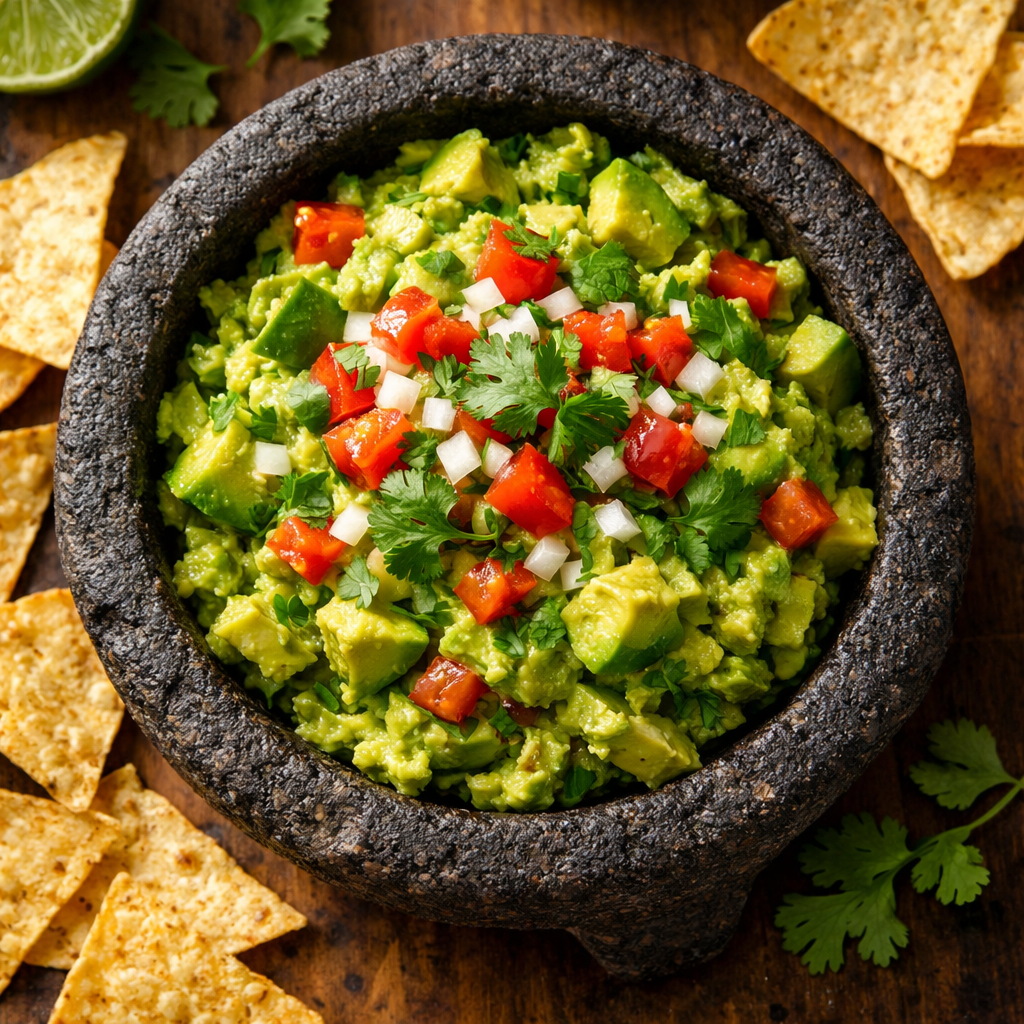
The first time I made guacamole from scratch, I thought I had done something wrong. It tasted nothing like the stuff from a jar, and I couldn’t figure out if that was good or bad. It was brighter, a little grassy, almost aggressively fresh. My wife took one bite and said it didn’t taste like guacamole. Then she took another bite. Then she ate half the bowl standing at the counter while I was still trying to get the chips open.
The thing about guacamole is that the recipe is almost insultingly simple, which is exactly why people overthink it. I’ve seen versions with sour cream, with corn, with mango, with approximately seventeen ingredients. Those aren’t bad, but they’re not guacamole — they’re dip. Real guacamole is avocado, lime, salt, and a handful of other things that stay out of the way. The avocado is the whole point. Everything else is just there to make it taste more like itself.
I’ve made this probably a hundred times at this point, for parties, for taco nights, for Tuesday afternoon when I just wanted something to eat with chips. The recipe hasn’t changed much. I add a little more jalapeño when I’m feeling adventurous and a little less when my in-laws are coming over. But the bones of it are the same every time, and it’s always gone before anything else on the table.

Homemade Guacamole
Ingredients
- 3 ripe avocados
- 1 lime, juiced
- 1/2 tsp kosher salt plus more to taste
- 1/2 small white onion, finely diced
- 1 jalapeño, seeded and minced
- 1 small handful fresh cilantro, roughly chopped
- 1 Roma tomato, seeded and diced
Instructions
- Cut avocados in half, remove the pits, and scoop the flesh into a bowl.
- Add the lime juice and salt immediately. Mash with a fork to your preferred texture — somewhere between smooth and chunky works well.
- Add the onion, jalapeño, cilantro, and tomato. Fold together gently to maintain some texture.
- Taste and adjust salt and lime as needed. Let sit for 5 minutes before serving.
- Serve with tortilla chips.
Notes
Nutrition
Ingredients
You’ll need 3 ripe avocados, 1 lime (juiced), half a teaspoon of kosher salt, half a small white onion (finely diced), 1 jalapeño (seeded and minced), a small handful of fresh cilantro (roughly chopped), and 1 Roma tomato (seeded and diced). That’s it. Don’t let anyone talk you into adding mayonnaise.
How to Make It
Cut your avocados in half, remove the pits, and scoop the flesh into a bowl. Add the lime juice and salt right away — the lime slows down browning and the salt starts pulling flavor out of the avocado immediately. Mash with a fork to whatever texture you like. I go about halfway between smooth and chunky, so there are still some bigger pieces but it holds together on a chip. If you want it completely smooth you can, but I think you lose something.
Add the onion, jalapeño, cilantro, and tomato. Fold everything together gently rather than stirring hard — you want to keep some of that texture you just created. Taste it. It probably needs more salt and more lime than you think. Add them a little at a time until it tastes like something you’d be embarrassed to have people find out you ate most of yourself.
Let it sit for five minutes before serving if you can manage it. The flavors settle and the salt has time to do its thing. Serve with tortilla chips, or honestly just eat it with a spoon.
Tips
Ripe avocados are non-negotiable. Press the avocado gently with your thumb — it should give slightly, like pressing on the fleshy part of your palm. If it’s rock hard, leave it on the counter for a day or two. If it’s so soft it feels hollow, it’s probably past it. The skin near the stem is a good tell too: peel off the little nub at the top and look at the color underneath. Green is good. Brown means you’re making avocado toast.
White onion is sharper and cleaner than yellow for this. If you only have yellow it’ll still work, but the flavor is different. Some people rinse their diced onion under cold water first to take the edge off — I skip it, but it’s worth knowing about if you’re sensitive to raw onion.
Seed the jalapeño but keep some of the white membrane if you want heat. Most of the spice lives there. Remove all of it for a mild version. For people who want it hot, leave the seeds in or add a second pepper.
Variations
If you want to get a little fancier, roasting the jalapeño directly over a gas flame (or under the broiler) before mincing it adds a smoky background note that’s really good. I do this maybe a third of the time, usually when I’m already grilling something else.
A pinch of cumin is divisive. I know people who swear by it and people who think it ruins guacamole. I’m in the occasional-pinch camp — it adds depth without announcing itself, but only if it’s fresh cumin. Old dusty cumin from the back of your spice cabinet will taste like cardboard.
Mango guacamole is a real thing and it’s actually good. Dice one small ripe mango and fold it in at the end. Works especially well with fish tacos. Just don’t call it guacamole at a party or someone will correct you.
Storage and Make-Ahead
Guacamole browns because the avocado oxidizes when it hits air. The lime juice helps, but it doesn’t stop it completely. The old trick of pressing plastic wrap directly onto the surface of the guacamole (no air gaps) actually works pretty well. So does leaving the avocado pit in the bowl, though that only protects the part of the surface directly under the pit, so it’s a partial solution at best.
Made fresh is always better, but if you need to make it ahead, it’ll hold in the fridge for a day. Stir it before serving and add a fresh squeeze of lime. It might have some gray on the surface — just scrape that off. It’s not pretty but it’s perfectly fine to eat.
Frequently Asked Questions
How do I know when an avocado is ripe?
Press it gently. It should yield to light pressure without feeling mushy. The skin should be dark, almost black for Hass avocados. If it’s still green and firm, leave it out at room temperature for one to two days. Don’t put unripe avocados in the fridge — cold stops the ripening process.
Why does my guacamole taste bland?
It needs more salt and more lime. This is almost always the answer. Add salt in small increments, stir, and taste after each addition. Same with lime. Most first-time guacamole makers undersalt significantly.
Can I make guacamole without cilantro?
Yes, and if you’re one of the people who tastes cilantro as soap, leave it out entirely. The guacamole will still be good. A little flat parsley gives you some green without the divisive flavor.
What’s the best way to keep guacamole from browning?
Lime juice helps. Pressing plastic wrap directly against the surface helps more. Some people add a thin layer of water on top and pour it off before serving — this actually works but it’s a little odd. The most honest answer is that guacamole is best eaten fresh, and if you’re making it for a party, make it right before people arrive.
Can I freeze guacamole?
You can, and it works better than you’d expect. Freeze it in an airtight container or a zip bag with the air squeezed out. Thaw in the fridge overnight. The texture gets a little softer after freezing, so it’s better for spreading than for dipping, but it’s a good way to use up avocados that are all ripening at once.


