

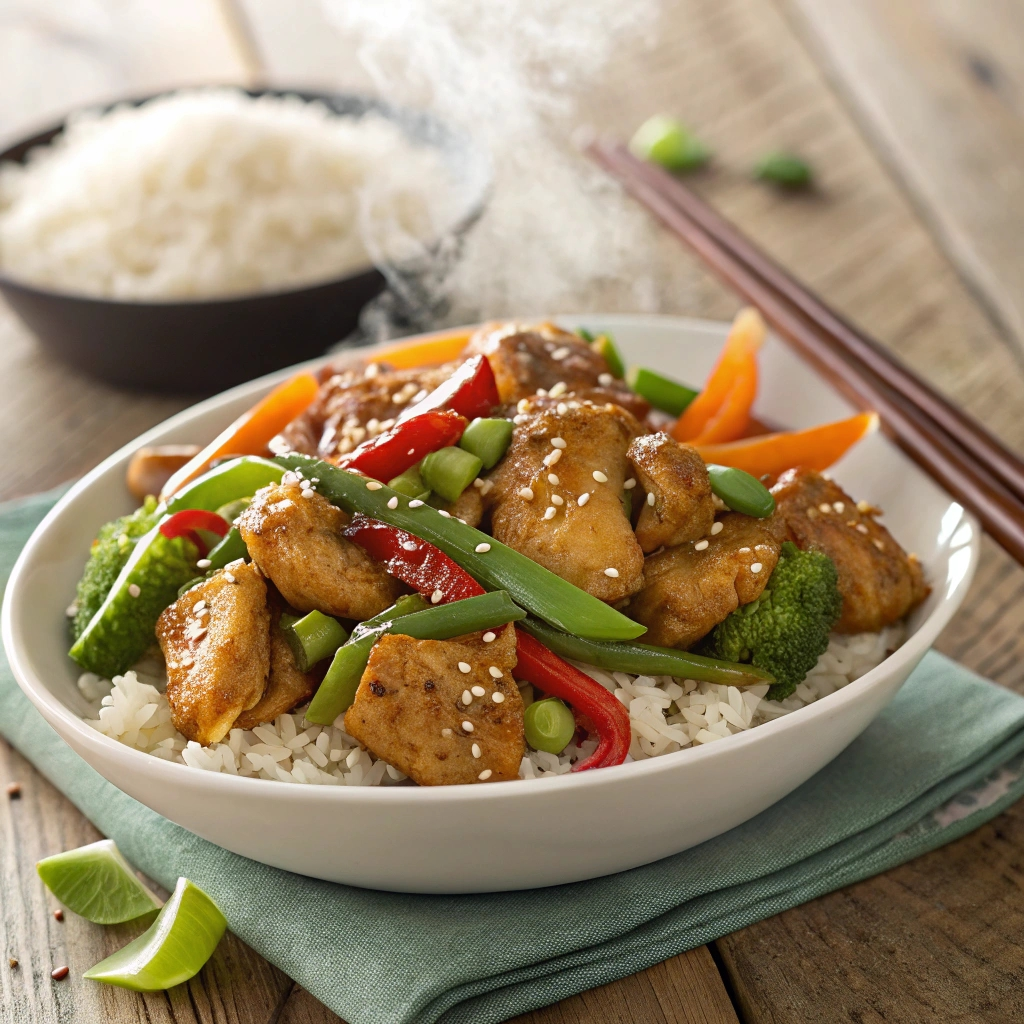

If I had to pick one weeknight dinner that I come back to more than any other, it’s this teriyaki stir-fry. It takes about 25 minutes from fridge to plate, it uses ingredients I almost always have on hand, and my whole family actually eats it without complaint. That last part alone makes it worth sharing.
I used to order teriyaki from takeout places pretty regularly until I realized the homemade version is faster than delivery and tastes noticeably better. The sauce comes together in a bowl while the chicken cooks, and by the time the rice is done, dinner’s on the table. It’s become one of those recipes I can make almost on autopilot at this point.

Teriyaki Chicken Stir-Fry
Ingredients
Chicken
- 1.5 lbs boneless skinless chicken thighs sliced into bite-sized pieces
- 1 tbsp vegetable oil
- salt and pepper
Vegetables
- 1 red bell pepper sliced
- 1 cup broccoli florets
- 1 cup snap peas
- 2 garlic cloves minced
Teriyaki Sauce
- 1/4 cup soy sauce
- 2 tbsp mirin or rice vinegar plus a pinch of sugar
- 1 tbsp honey
- 1 tsp sesame oil
- 1 tsp cornstarch mixed with 1 tbsp water
Instructions
- Mix all sauce ingredients together including the cornstarch slurry. Set aside.
- Heat oil in a large skillet or wok over medium-high heat. Season chicken with salt and pepper, then cook in a single layer for 5 to 6 minutes, flipping once, until golden. Remove and set aside.
- In the same pan, cook bell pepper and broccoli for 3 to 4 minutes until they have some color but still have bite. Add snap peas and garlic for one more minute.
- Return chicken to the pan, pour the sauce over everything, and stir until it thickens and coats everything — about 60 seconds.
- Serve over steamed rice.
Notes
Nutrition
Here’s what goes into it, how to pull it together, and some lessons I’ve learned from making it way too many times.
Ingredients
For the chicken: 1.5 lbs boneless skinless chicken thighs, sliced into bite-sized pieces (about 1-inch chunks). 1 tablespoon vegetable oil or any neutral high-heat oil. Salt and pepper.
For the stir-fry vegetables: 1 red bell pepper sliced into strips, 1 cup broccoli florets (cut them small so they cook fast), 1 cup snap peas with the strings removed, and 2 cloves garlic minced. You can absolutely swap or add other vegetables here. This is a framework, not a strict recipe.
For the teriyaki sauce: ¼ cup soy sauce, 2 tablespoons mirin (a sweet Japanese rice wine, available in most grocery stores now). If you can’t find mirin, use rice vinegar with a generous pinch of sugar. 1 tablespoon honey for sweetness, 1 teaspoon toasted sesame oil for that nutty depth, and 1 teaspoon cornstarch mixed with 1 tablespoon cold water. This cornstarch slurry is what gives the sauce that glossy, clingy texture that coats the chicken instead of just running off into the bottom of the pan.
The Process
Start your rice first. If you’re using a rice cooker, start it before you do anything else. If cooking on the stove, get the water boiling. You want the rice ready right when the stir-fry comes together.
While the rice cooks, mix all the sauce ingredients together in a small bowl, including the cornstarch slurry. Whisk it well so the cornstarch doesn’t clump. Set it aside.
Heat the oil in a large skillet or wok over medium-high heat until it’s shimmering. This is important. If the pan isn’t hot enough, the chicken will steam instead of sear. Season the chicken with salt and pepper, then add it to the pan in a single layer. Don’t crowd it. If you dump everything in at once, the temperature drops and the chicken releases moisture instead of browning. Work in two batches if your pan isn’t big enough. Cook for about 5 to 6 minutes total, flipping once, until the pieces are golden brown on the outside and cooked through. Transfer to a plate.
In the same pan (don’t clean it, those browned bits are flavor), add the bell pepper and broccoli. Cook for 3 to 4 minutes, tossing occasionally, until they start to get some color on the edges but still have a firm bite. You want crisp-tender, not mushy. Add the snap peas and garlic for just one more minute. Garlic goes in late because it burns fast over high heat and turns bitter.
Return the chicken to the pan. Give the sauce a quick stir (the cornstarch settles) and pour it over everything. Toss and stir constantly for about 60 seconds. The sauce will thicken quickly and turn glossy, coating the chicken and vegetables in a shiny, sticky glaze.
Serve immediately over steamed rice. Done.
Why Chicken Thighs
I know a lot of stir-fry recipes call for breast meat, but thighs are juicier and significantly more forgiving. They don’t dry out as easily, they absorb sauce better, and the extra fat keeps them tender even if you overcook them by a minute or two. Chicken breast works if that’s what you prefer, but you’ll need to be more careful with timing. Slice it thin and don’t overcook it or it’ll get rubbery.
Make It Your Own
This recipe is really a template. Once you’ve got the sauce and the technique down, you can swap things around endlessly.
Different proteins: Shrimp (cook about 2 minutes per side and remove before the vegetables), firm tofu (press it for 20 minutes, cube it, and pan-fry until crispy on all sides before adding sauce), or thinly sliced beef like flank steak (slice against the grain and cook fast over high heat).
Different vegetables: Mushrooms, zucchini, carrots (slice thin so they cook fast), baby corn, water chestnuts, bok choy, or asparagus all work. Use whatever you have or whatever looks good at the store.
Add some heat: A squirt of sriracha in the sauce, a teaspoon of gochujang (Korean chili paste), or some red pepper flakes tossed in with the garlic. The sweetness of the teriyaki balances heat really well.
Different base: Instead of white rice, try it over brown rice, cauliflower rice for a lower-carb version, or toss the whole thing with udon or lo mein noodles.
Leftovers and Meal Prep
This reheats well the next day, which makes it a solid meal prep option. Store it in an airtight container in the fridge for up to 3 days. Reheat in a skillet over medium heat or in the microwave. The rice will absorb some of the sauce overnight, so you might want to add a splash of soy sauce or a drizzle of water when reheating to loosen things up.
If you’re meal prepping for the week, cook the chicken and vegetables and store them separate from the rice. The rice dries out faster when stored together. Combine when reheating.
Frequently Asked Questions
What’s mirin and where do I find it? Mirin is a sweet Japanese rice wine used in cooking. It’s in the Asian aisle of most grocery stores, near the soy sauce. If you truly can’t find it, mix 2 tablespoons of rice vinegar with 1 teaspoon of sugar as a substitute.
Can I use bottled teriyaki sauce? You can, but homemade is better and almost as fast. Bottled versions tend to be sweeter and have a more artificial flavor. Once you make this sauce from scratch, you probably won’t go back.
Why is my stir-fry watery? Two common reasons: the pan wasn’t hot enough (so the food steamed instead of seared), or the pan was overcrowded (too much food at once lowers the temperature). Cook in batches and make sure the oil is shimmering before anything goes in.


